
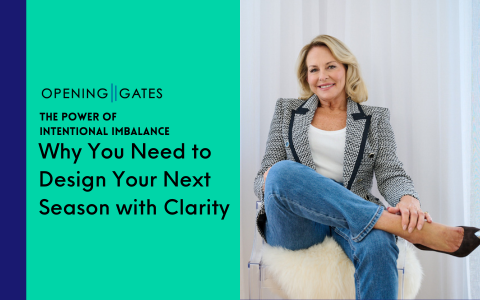
Every December, I find myself doing the same thing many business owners and professionals do. I take a deep breath, look back at the year that was, and start thinking about the year ahead. It is easy to fall into the trap of trying to make everything neat and complete before the calendar turns. I used to think that finishing strong meant tying up every loose end and finding a perfect balance between work and life before I took a break. But over time, I have learned that perfect balance is not only unrealistic, it can also get in the way of progress.
What I have found more valuable is a concept I call Intentional Imbalance. It is the idea that true success comes from consciously choosing where to focus your energy, rather than trying to keep everything equal all the time. This mindset has changed how I work, how I lead, and how I live.
The Myth of Balance
For years, I would chase balance as if it were the ultimate goal. I believed that if I could simply manage my time a little better or say “no” a little more often, I would find that elusive sweet spot where work, relationships, health, and rest all coexisted in perfect harmony. But we all know from experience that life is not built that way. Business certainly isn’t. Some seasons require all of you, like a product launch, a period of growth, or a stretch of personal change. Events like this demand focus and energy and tend to pull your attention away from other areas. Then, there are quieter seasons that allow for recovery, reflection, and recalibration.
Once I stopped judging myself for my apparent “lack of balance” and started embracing the imbalance, things began to move more smoothly. I realised that the key wasn’t to eliminate imbalance, but to make it intentional. When I decide where to place my focus, I can lead with clarity instead of guilt. I can pour my energy into what matters most in this moment, knowing that I will rebalance when the season changes. That is what living and leading by design looks like.
Recognising the Season You’re In
As we approach the end of the year, it is worth asking yourself: What season am I in right now? Maybe you are in a season of building. You might be refining systems, setting new goals, or preparing your business for growth. Your focus needs to be sharp, your pace steady, and your energy directed toward creation. Or maybe you are in a season of transition. You have closed projects, completed major work, or wrapped up a demanding year. This season might call for rest and reflection, rather than urgent action. Neither is right nor wrong. What matters is recognising which one you are in and adjusting accordingly.
Too often, we keep operating at the same pace simply because it has become familiar. We hold ourselves to standards that made sense six months ago but no longer serve where we are now.
Intentional Imbalance invites you to pause, reflect on your reality, and decide where your attention will have the greatest impact.
Resetting the Operating System
One of the most powerful practices I do each December is what I call an Operating System Reset. It is the process of checking in on the patterns, structures, processes, mindsets and habits which run in the background of my business and my life. This operating system can either limit outcomes or enable even better results. If we’re planning on achieving better results, then, just like a computer, we may need to upgrade our operating systems to a more aligned version. Perhaps it’s in the ways we make decisions or the mindset we bring to challenges. Leaders who operate on a “Version 1.0” mindset cannot run a “Version 4.0” business. People who aspire to live a “Version 4” lifestyle, will need to upgrade their “Version 1.0) mindset. Unless we stop to review our operating systems, they will run the show. They will limit what is possible for us. So, a critical part of setting new goals for the year ahead requires asking myself a few questions:
- What parts of my current system are still working well?
- What habits or beliefs have become outdated?
- Where am I still running old code, processes, expectations, or behaviours that belong to a previous version of me or my business?
- What do I need to upgrade to align with who I am becoming?
This reflection creates space for conscious change. It reminds me that I cannot expect new results from an old framework. Systems, leadership mindsets and people and culture must be ready and able to deliver what I have planned. Sometimes the reset is small, like simplifying a workflow or changing how I structure my week. Other times, it is much bigger, like revisiting my boundaries or redefining what success looks like in the next season. Either way, the reset is a deliberate choice to redesign or upgrade my operating system, and not be limited by it.
Planning in Sprints, Not Years
Once I have cleared space and refreshed my systems, I start planning the next cycle. I take my one-year plan and chunk it down into 90-day sprints. A whole year is too long to stay connected to one goal or one plan. The power of a goal is diminished the longer the lead time. And, our environment is shifting faster than ever, and we need to adapt quickly. Instead, I plan, strategize and set goals in 90-day sprints or, in some cases, 30-day impact challenges. Each sprint has a clear focus. I decide what success looks like for that period, identify the actions that will drive the most impact, and create simple measures to track progress. This structure builds momentum faster than traditional goal setting because it keeps the horizon closer. I can see the endpoint and adjust quickly if something changes.
It also stops me from falling into the trap of waiting until “later” to make progress. Later becomes now, because the time frame is short enough to feel real. For example, instead of
setting a goal like “grow the business by 20 per cent this year,” I might set a 90-day sprint to deepen client engagement, improve internal systems, or expand one specific service. Each sprint becomes a focused container for meaningful progress. It creates energy and accountability without the overwhelm of a year-long plan. And every time I complete one, I pause to review, celebrate, and reset before the next begins.
Rest as a Strategic Choice
The other piece that has become central to Intentional Imbalance is rest. Not rest as an afterthought. Not rest as a reward for reaching the end. Rest as a strategic decision. When I am rested, I notice that I make better decisions. It’s easier to lead with confidence, and I see the patterns I miss when I am running on adrenaline and coffee. The week between Christmas and New Year used to feel like an opportunity to catch up, so I would fill it with planning, clearing emails, or starting next year’s work early. Now, I treat that lull as part of the rhythm. It’s my recovery time. Without that pause, I might carry fatigue into the new year and mistake motion for momentum. Some seasons, though, it makes complete sense for me to be busy during that time, because I know I’m capable of choosing rest at another time that suits me even better.
Moving Into the New Year with Purpose
Intentional Imbalance gives me permission to focus where it counts. It allows me to lead without guilt, to prioritise with confidence, and to rest without apology. It also gives me clarity about what truly matters for the season ahead. So, before I turn the page on another year, I like to take a moment to reflect:
- What did I gain this year that I want to carry forward?
- What do I need to let go of?
- Where do I want to place my energy next?
- How can I create more space for focus, creativity, and recovery?
These questions guide how I design my next season of work and life. Because the truth is, success is rarely about doing more. It is about doing what matters most, with full intention and clean energy. As you look ahead, I encourage you to give yourself permission to live and lead in a way that fits you. Recognise your season. Reset what needs to change. Work in focused sprints. And make rest part of the plan. You do not need to have it all balanced to move forward with purpose. You just need to choose your imbalance with intention.

